
The Fashion Brides — Bridal Style Guide
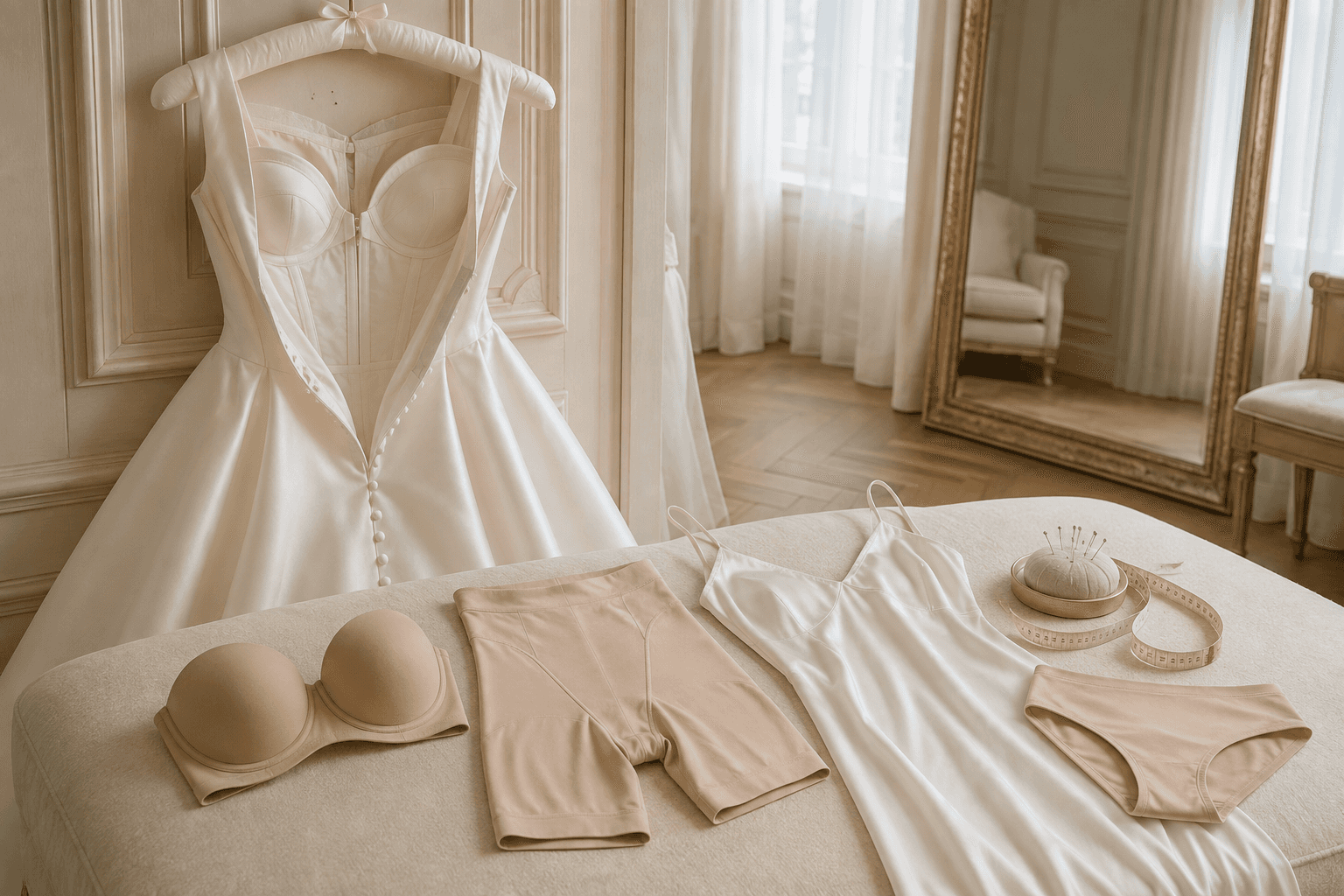
What to Wear Under a Wedding Dress: Bras, Shapewear, Slips and Built-In Support
The best wedding-day underwear is not automatically the most structured, expensive or compressive option. It is whatever works invisibly with the construction of your actual dress—and remains comfortable for an entire day.
Bridal underwear is often treated as a compulsory shopping category, but there is no universal list of garments every bride needs. A structured strapless gown may provide all the support itself. A fluid crepe dress may benefit from smoothing shorts or a slip. A low-backed dress may rule out conventional shapewear entirely.
The decisive factors are the gown’s neckline, back, fabric, transparency and internal construction. Your seamstress should see every proposed undergarment before the final alterations are completed, because even a different bra cup or shapewear waistband can change where the dress sits.
Start With the Dress, Not the Underwear
Never buy an elaborate bridal lingerie set before choosing the gown. The bra that works under a bateau-neck satin dress may be completely visible under a plunging, open-back design. Likewise, high-waisted shapewear can create a line beneath a fitted waist or show through an illusion panel.
Before shopping, inspect these five details
- Neckline: strapless, plunge, halter, one-shoulder, off-the-shoulder or high neck.
- Back: full, low, sheer, corset-laced or completely open.
- Fabric: structured and opaque, or light and inclined to reveal seams.
- Fit: close through the torso and hips, or loose beneath the waist.
- Built-in structure: cups, boning, waist stay, corset, power mesh or inner bodice.
Do You Need a Bra Under a Wedding Dress?
Frequently, no. Properly fitted bridal bodices can support the bust through their own engineering. Sewn-in cups provide shape, while boning and a close-fitting underbodice distribute support through the torso. Adding a separate bra can create excess bulk, distort the neckline or make the bodice sit farther away from the body.
However, built-in cups are not automatically sufficient for every bust or every dress. Brides who want more lift, separation or stability should discuss alterations with a bridal seamstress. Changing the cup size, adding stronger cups, adjusting boning or installing a supportive inner band can be more effective than forcing a conventional bra beneath an incompatible neckline.
Built-in cups
Best for shaping and coverage. They can be replaced or repositioned during alterations, but cups alone do not always provide substantial lift.
Internal corsetry
Boning, firm lining and a waist stay can support the gown from the torso, making an additional bra unnecessary.
Strapless bra
Useful only when its band and cups remain fully concealed and do not compete with the dress’s structure.
Longline bra or bustier
Offers extended torso support, but must match the neckline and back precisely. It can be too bulky beneath close-fitting gowns.
The Best Support for Each Wedding Dress Neckline
| Dress design | Options to consider | Watch for |
|---|---|---|
| Strapless | Built-in corsetry, sewn-in cups or a well-fitted strapless bra | A bra band that pushes the bodice outward or appears above the back |
| Plunging neckline | Plunge bra, altered cups, supportive tape or built-in support | A center gore that is visible in the plunge |
| Low or open back | Built-in cups, alteration-based support or carefully tested tape | Low-back converters that pull awkwardly or fail to provide enough support |
| Halter | Built-in support, convertible halter bra or tape | Straps showing near the neck and pressure on the shoulders |
| One-shoulder | Built-in cups or a secure convertible strapless bra | Detachable straps and hardware becoming visible |
| Full back with straps or sleeves | Regular supportive bra, if the dress does not already provide support | Bra straps showing through lace, mesh or a wide neckline |
Bridal Shapewear: When It Helps—and When It Does Not
Shapewear is optional. Its most useful role is usually smoothing the transition between underwear and the body beneath a close-fitting fabric. It cannot correct a dress that is the wrong size, and aggressive compression can create new ridges where the garment ends.
Choose the lightest level of compression that achieves the finish you want. You should be able to sit, eat, breathe deeply, use the bathroom and dance without a struggle. If you continually adjust the shapewear during a fitting, it is unlikely to become comfortable on the wedding day.
Smoothing shorts
A practical choice beneath fitted skirts. Select a leg length that ends where it will not cut into the thigh or show beneath a slit.
High-waisted shorts
Smooth the waist, abdomen and hips, but the waistband must remain below any low back or illusion panel.
Open-bust bodysuit
Allows the dress or a separate bra to shape the bust while smoothing the torso. Check every edge beneath the gown.
Low-back shapewear
Designed for open-backed dresses, though the exact depth varies. Try it with the gown rather than trusting the product photograph.
Shapewear by wedding dress silhouette
- Ball gown: usually little or no shapewear is needed beneath the voluminous skirt.
- A-line: seamless underwear may be enough unless the bodice or upper hip is very fitted.
- Fit-and-flare, trumpet or mermaid: seamless smoothing shorts can help, but they must not restrict movement.
- Sheath or column: lightweight, edge-free shapewear or a slip may create the smoothest result.
- Slip dress: prioritize invisible seams and minimal bulk; heavy compression can show through delicate fabric.
Slips, Petticoats and Skirt Linings
A slip creates a smooth layer between the body and the dress. It can reduce static, prevent a skirt from catching on the legs and add opacity beneath light-colored or fluid fabric. A simple half-slip is different from a bridal petticoat or hoop, which changes the shape and volume of the skirt.
Wear a petticoat only if it supports the intended silhouette. The circumference, number of layers and placement of volume all matter: too much fullness can alter the proportions of the gown, while too little may fail to keep fabric away from the feet. Bring it to every fitting once the hem is being set.
What Color Underwear Should You Wear?
Under white or ivory fabric, underwear close to your own skin tone is generally less visible than white underwear. White creates a bright contrast against the skin and can show through a sheer or lightweight dress. “Nude” is not one universal beige: test several tones and choose the one that visually recedes against your skin.
Also consider texture. Lace, raised seams, decorative edging and thick elastic may remain visible even when the color is perfect. Smooth, bonded or laser-cut styles are usually safer beneath fitted crepe, silk-like satin and other unforgiving fabrics.
What Underwear Works Best With Different Fabrics?
| Wedding dress fabric | Best starting point | Main concern |
|---|---|---|
| Mikado or structured satin | Seamless briefs; minimal additional layers | Bulk beneath a naturally supportive, structured gown |
| Crepe | Laser-cut underwear, smoothing shorts or a thin slip | Visible seams, waistbands and fabric indentations |
| Silk or satin slip dress | Very smooth, lightweight underwear in a skin-matching tone | Every edge may show; heavy shapewear can look obvious |
| Lace | Depends on the lining; smooth underwear remains safest | Sheer areas and strategically placed motifs |
| Tulle or organza skirt | Briefs plus the gown’s lining or an approved petticoat | Transparency and static rather than body contour |
| Illusion mesh | Built-in support and precisely positioned cups | Straps, bands or shapewear showing through transparent panels |
Boob Tape, Adhesive Bras and Nipple Covers
Adhesive solutions can work beneath plunging, backless or asymmetrical dresses, but they require a full trial before the wedding. Supportive tape must be positioned to suit both the bust and the dress; adhesive cups generally provide coverage and shaping rather than the same support as a banded bra.
Test the product for comfort, visibility, movement and skin compatibility well in advance. Follow the manufacturer’s application and removal instructions, apply only to healthy skin and do not improvise with household tape. Heat, perspiration and a long wearing time can change how an adhesive performs.
What to Wear to Wedding Dress Fittings
Your fitting bag
- The exact bra, cups, tape solution or shapewear you plan to wear
- Your wedding shoes—or shoes with the identical heel height
- Your slip, petticoat or hoop, if the gown requires one
- Any detachable straps, sleeves or dress accessories
- Seamless skin-tone underwear as a reliable backup
At the first fitting, ask the seamstress to assess the gown before assuming you need more support. At the final fitting, walk, sit, raise your arms and mimic dancing. Look at the dress from the front, side and back in both natural and flash photography if possible.
Do
- Prioritize fit and comfort.
- Test everything with the actual gown.
- Match underwear to your skin, not the dress.
- Let the seamstress alter cups and support where possible.
- Bring every underlayer to the hem fitting.
Do not
- Buy shapewear simply because you think brides “should.”
- Size down for stronger compression.
- Assume a low-back product fits every low-back gown.
- Wear untested adhesive products for the first time.
- Sacrifice breathing, eating or movement for a minor visual change.
A Simple Wedding-Day Underwear Formula
For many brides, the best solution is surprisingly uncomplicated: seamless skin-tone briefs, the support already built into the dress and no additional layers. Add a bra only if it improves support without becoming visible. Add shapewear only if it produces a smoother finish while remaining comfortable. Add a slip or petticoat only if the fabric or silhouette requires it.
The goal is not to build an elaborate structure beneath the gown. It is to make the dress look and feel as though nothing underneath it requires your attention.
Frequently Asked Questions
Should I wear a bra while trying on wedding dresses?
Wear a comfortable strapless bra if you prefer, but expect to remove it for gowns with built-in support or incompatible necklines. Seamless skin-tone underwear is the most useful fitting-room basic.
Can cups be sewn into any wedding dress?
Cups can be added to many gowns, but the result depends on the bodice construction, lining, neckline and amount of support required. A bridal seamstress should assess the individual dress.
Is shapewear necessary under a fitted wedding dress?
No. Seamless underwear may be sufficient. Shapewear is useful only when it creates a finish you prefer without adding visible edges, discomfort or restricted movement.
What do you wear under a backless wedding dress?
Common options include built-in cups, alteration-based internal support, nipple covers, adhesive cups or properly tested breast tape. The depth and shape of the back determine what can remain hidden.
Should bridal underwear be white or nude?
A shade close to your skin tone is usually less visible beneath white or ivory fabric. Always test it under the actual dress and in different lighting.
When should I buy wedding underwear?
After choosing the dress and ideally before alterations begin. You need the final undergarments for fittings that determine the bodice fit and hem.
Fit and support vary by body and gown construction. For dress-specific advice, consult the bridal boutique and the professional altering your gown.
Tips & Tricks
View All Tips & Tricks


