
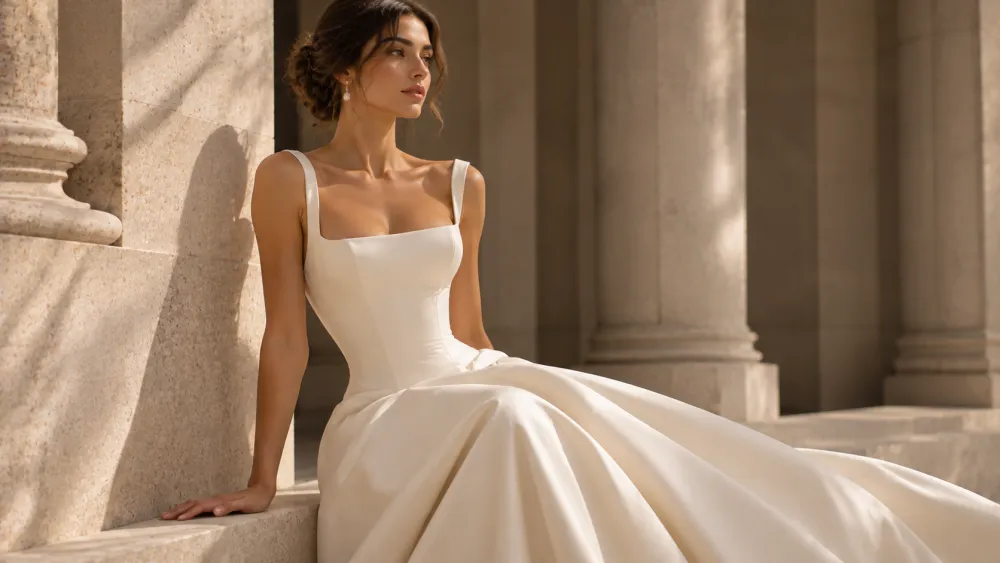
No elaborate embroidery to hide behind. No layers of decoration to distract the eye. Just cut, cloth and the confidence of a beautiful silhouette.
Minimalist wedding dresses are often described as simple. Anyone who has tried on a truly beautiful one knows that simple and easy are not the same thing.
Without lace, beading or appliqué competing for attention, every decision becomes visible: the angle of a neckline, the placement of a seam, the way a skirt falls when you walk.
the more each detail matters.
What Makes a Wedding Dress Minimalist?
Minimalism is an approach to design, not a single silhouette. A sleek column gown can be minimalist, but so can a full-skirted ball gown with a beautifully restrained bodice. The common thread is intentional editing: clean lines, controlled proportions and embellishment used sparingly, if at all.
That does not mean the dress must be plain, matte or entirely unadorned. A sculptural fold, a dramatic back or an unexpected neckline can provide all the visual interest a gown needs.
Four Ways to Make a Statement Without Embellishment
Fabric Is the Design
In a pared-back gown, fabric choice can change everything. Fluid crepe tends to follow the body and create a soft, continuous line. Satin catches the light and makes draping more visible. Mikado can support a crisp, sculptural skirt. Organza can introduce airy volume without heavy ornamentation.
Remember that these names do not all describe the same thing: satin is a weave, silk is a fibre, and mikado is a fabric type. Ask the boutique about the actual composition, weight and finish rather than relying on a label alone.
Why Fit Matters Even More
With minimalist bridalwear, an uneven hem or a bodice that shifts when you sit can be especially noticeable. During fittings, look at the gown from the front, side and back. Walk, sit, raise your arms and turn naturally.
Pay particular attention to how the fabric lies across the bust and hips, whether the waist stays where it should, and whether any pulling is part of the intended design or a fit issue.
Understated Isn’t Invisible.
A beautifully cut wedding dress does not need to shout. It simply needs to look extraordinary on the person wearing it.
Minimalist Doesn’t Mean Less Expensive
A gown with fewer visible details is not automatically cheaper to produce. Pattern development, skilled cutting, internal support, fabric quality and alterations can all contribute significantly to its cost.
Equally, a high price does not guarantee exceptional construction. Examine the lining, seams, closures and finishing. The inside of a dress can tell you as much as the outside.
How to Style a Minimalist Wedding Dress
Start with the silhouette rather than an accessory checklist. A sleek gown may look striking with sculptural earrings; a dramatic ball gown might need little more than a veil. A clean neckline can accommodate a statement necklace, but it does not require one.
Consider the whole look in motion. Will the veil cover an interesting back? Will an elaborate necklace compete with a carefully shaped neckline? Would a detachable cape give you ceremony drama without changing the dress itself?
Five Questions to Ask in the Boutique
And question five: does this dress still feel like you when the boutique lighting, pedestal and styling are taken away?
The Beauty of Knowing When to Stop
Minimalism is not about denying yourself romance, personality or drama. It is about deciding where those qualities should live: perhaps in a single magnificent bow, a perfectly shaped waist, or a skirt that moves beautifully with every step.
The best minimalist wedding dress is not the one with the fewest details. It is the one that needs nothing else.
Tips & Tricks
View All Tips & Tricks


