
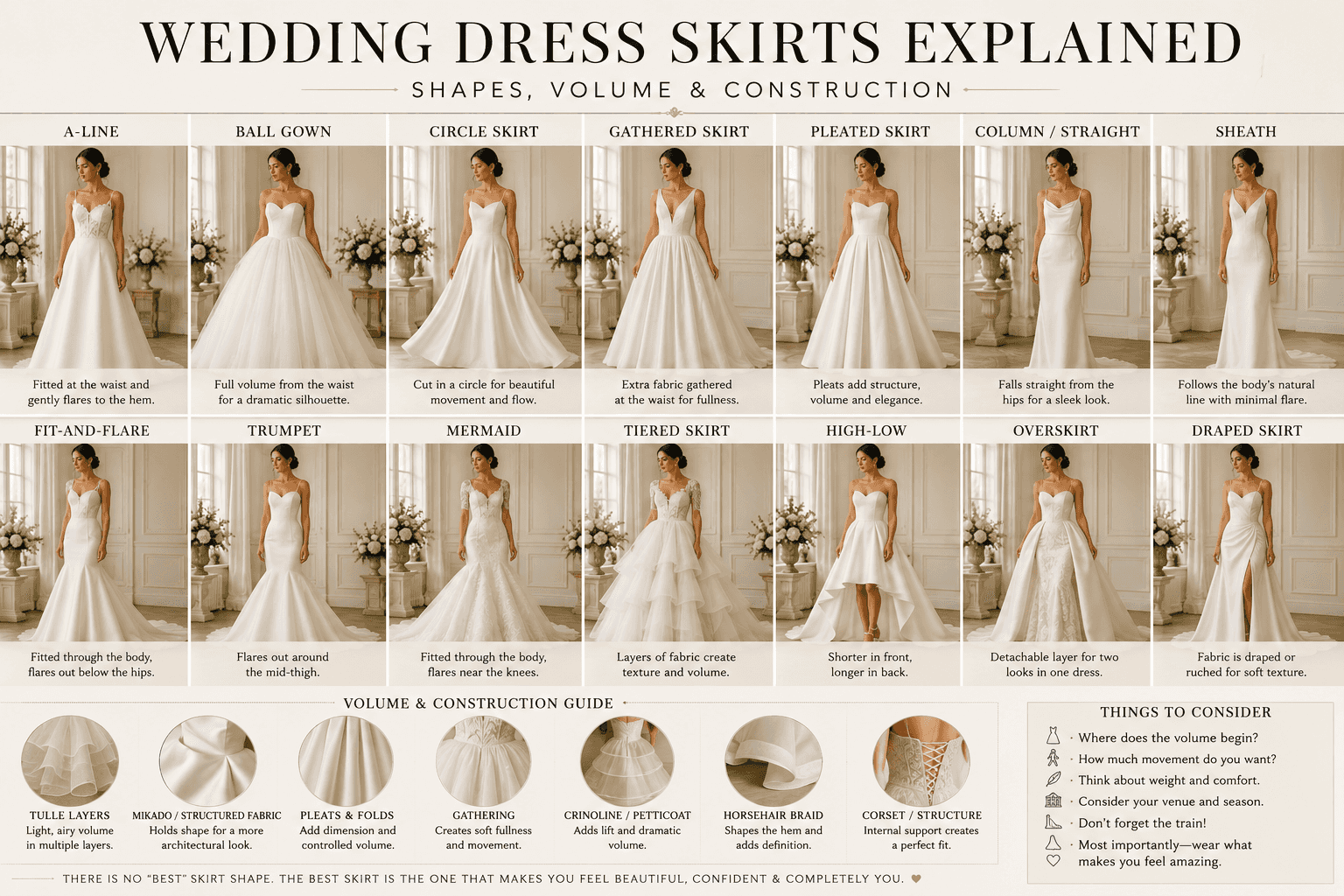
The skirt is one of the elements that defines a wedding dress most clearly. It determines how much volume the gown has, how it moves, where it creates shape and how dramatic the overall silhouette feels.
From sleek column skirts and soft A-lines to full ball gowns, layered tulle and sculptural overskirts, wedding dress skirts vary enormously in both shape and construction.
Understanding the main wedding dress skirt styles makes it much easier to see why two gowns with similar bodices can feel completely different once the skirt begins.
This guide explains the most common skirt shapes, how bridal volume is created and what to consider when choosing the right construction for your dress.
What Are the Main Wedding Dress Skirt Shapes?
The most common bridal skirt shapes include:
- A-line
- Ball gown
- Circle skirt
- Full gathered skirt
- Pleated skirt
- Column or straight skirt
- Sheath skirt
- Fit-and-flare skirt
- Trumpet skirt
- Mermaid skirt
- Tiered skirt
- High-low skirt
- Overskirt
Some gowns combine several of these constructions, so the category describes the dominant shape rather than every technical detail inside the dress.
What Is an A-Line Wedding Dress Skirt?
An A-line skirt is fitted or relatively narrow around the waist and gradually widens toward the hem.
The shape resembles the letter A, which is where the name comes from.
It is one of the most versatile bridal skirt constructions because the amount of volume can vary dramatically.
A soft chiffon A-line may fall close to the body, while a structured mikado A-line can create considerable width and presence.
Why Are A-Line Wedding Dresses So Popular?
A-line skirts offer a balance between structure and movement.
They create a defined waist without following the hips as closely as a mermaid or fit-and-flare gown.
They can also be adapted to almost every bridal aesthetic, from minimal to romantic to highly embellished.
What Is a Ball Gown Skirt?
A ball gown skirt creates substantial volume from the waist downward.
The skirt may be supported by layers of tulle, crinoline, petticoats or structured fabric.
Some ball gowns are softly full, while others create a dramatic architectural shape.
The key distinction is that the volume begins relatively high rather than following the hips closely.
How Is Ball Gown Volume Created?
There are several ways to create volume:
- Multiple layers of tulle
- Gathering at the waist
- Large pleats
- Circle-cut fabric
- Crinoline or petticoats
- Horsehair braid at the hem
- Structured fabrics such as mikado or gazar
The internal construction matters just as much as the visible fabric.
What Is a Circle Skirt?
A circle skirt is cut from a large circular or partially circular piece of fabric.
This construction creates generous movement without relying entirely on gathers or pleats.
When the bride turns or walks, the skirt can open beautifully around the body.
Circle skirts can appear in minimalist satin gowns, tea-length dresses and full bridal silhouettes.
What Is a Gathered Wedding Dress Skirt?
A gathered skirt uses extra fabric that is drawn together at the waist or another seam.
The more fabric used, the fuller the skirt becomes.
Soft gathering can create romantic movement, while dense gathering can produce substantial volume.
Tulle and lightweight fabrics are particularly suited to this construction because large amounts of material can be gathered without becoming excessively heavy.
What Is a Pleated Wedding Dress Skirt?
Pleated skirts use folded fabric to create volume in a more controlled way.
The pleats may be large and sculptural or narrow and delicate.
Box pleats and knife pleats can create very different effects.
Structured fabrics make the geometry more visible, while softer fabrics allow the pleats to relax into movement.
What Is a Box-Pleated Bridal Skirt?
Box pleats create wide, structured folds that open away from the waist.
They are particularly effective in mikado, satin and other fabrics with enough body to hold their shape.
This construction can create the impression of a very full skirt without the same softness as gathered tulle.
What Is a Column Wedding Dress Skirt?
A column skirt falls relatively straight from the hips toward the floor.
It creates a long, narrow silhouette with minimal volume.
Column skirts are especially common in minimalist bridal fashion and fabrics such as crepe, silk and satin.
The effect depends heavily on precise fit because there is less fabric to disguise pulling or imbalance.
What Is a Sheath Wedding Dress Skirt?
A sheath skirt follows the natural line of the body without creating a dramatic flare.
The terms sheath and column are often used interchangeably, although sheath gowns may follow the body slightly more closely.
Both create a streamlined silhouette rather than significant skirt volume.
What Is a Fit-and-Flare Skirt?
A fit-and-flare wedding dress follows the body through the waist and hips before gradually widening lower down.
The transition is usually softer than a dramatic mermaid silhouette.
This shape creates visible curves while still allowing more ease of movement than very tightly fitted skirt constructions.
What Is a Trumpet Skirt?
A trumpet skirt fits through the hips and begins to flare around the mid-thigh.
The flare is usually more defined than on a fit-and-flare gown but begins higher than on a traditional mermaid silhouette.
This creates a strong hourglass shape without concentrating all the volume close to the knees.
What Is a Mermaid Wedding Dress Skirt?
A mermaid skirt follows the body closely through the hips and thighs before flaring dramatically near the knees or lower.
It is one of the most sculptural bridal silhouettes.
The lower flare may be created with panels, godets, tulle, ruffles or structured fabric.
Because the skirt remains fitted for longer, movement is especially important to test before buying.
What Are Godets?
Godets are triangular or wedge-shaped pieces of fabric inserted into a skirt to create extra flare and movement.
They are commonly used in mermaid and trumpet wedding dresses.
A designer can add volume only where needed without making the entire skirt wider from the waist.
Godets may be made from the same fabric as the gown or from a contrasting material such as tulle or lace.
What Is a Tiered Wedding Dress Skirt?
A tiered skirt is made from multiple horizontal sections or layers.
The tiers may be subtle or extremely dramatic.
Tulle and organza are frequently used because they create lightness and movement, while ruffled tiers can produce much more volume.
Are Ruffled Wedding Dress Skirts the Same as Tiered Skirts?
Not always.
Ruffles may be arranged in tiers, but they can also spiral, cascade diagonally or appear only in selected sections of the skirt.
The important distinction is that ruffles create surface volume as well as overall shape.
What Is a High-Low Wedding Dress Skirt?
A high-low skirt is shorter at the front and longer at the back.
The difference may be subtle or highly dramatic.
This construction allows the shoes and legs to remain visible while still preserving the movement and presence of a longer bridal skirt.
What Is an Overskirt?
An overskirt is an additional layer worn over the main wedding dress.
It may attach at the waist and can often be removed.
Overskirts are especially useful for brides who want two different silhouettes from one gown.
A fitted column or mermaid dress can become a full ball gown for the ceremony and return to its original shape for the reception.
Are Detachable Overskirts Practical?
They can be very practical when designed well.
Check how the overskirt attaches and whether the fastening remains visible after removal.
Also consider its weight.
A heavily embellished overskirt can add a surprising amount of bulk around the waist.
What Is an Asymmetric Wedding Dress Skirt?
An asymmetric skirt does not fall evenly around the body.
The design may feature diagonal draping, one-sided volume, an uneven hem or sculptural folds concentrated on one side.
These skirts tend to feel more fashion-forward because the eye is deliberately pulled away from traditional symmetry.
What Is a Draped Wedding Dress Skirt?
Draping uses fabric arranged in folds across the body rather than simply hanging straight from a seam.
It can create softness, movement and visual texture without requiring embellishment.
Silk, satin and crepe are particularly beautiful when draped because their surface catches light across the folds.
What Is a Ruched Wedding Dress Skirt?
Ruching creates gathered folds of fabric over a smaller area.
It is often used around the waist, hips or side seams of fitted dresses.
Unlike a fully gathered skirt, ruching generally creates surface texture rather than large overall volume.
What Is a Panelled Wedding Dress Skirt?
Panelled skirts are constructed from several vertical pieces of fabric sewn together.
The number and shape of the panels determine how closely the skirt follows the body and where it begins to flare.
This construction is especially common in mermaid, trumpet and fit-and-flare gowns.
What Is Bias-Cut Skirt Construction?
A bias-cut skirt is cut diagonally across the grain of the fabric.
This allows the material to drape and follow the body more fluidly.
Bias-cut silk wedding dresses often appear deceptively simple because the elegance comes from the way the fabric falls rather than from visible structure.
They require extremely precise cutting and fitting.
What Is Horsehair Braid?
Horsehair braid is a flexible synthetic trim sewn into the hem or seams of a skirt to give the fabric more shape.
Despite the name, modern horsehair braid is generally not made from actual horsehair.
It can help a tulle or organza skirt hold a wave, curl outward or create more defined volume along the hem.
Why Do Some Wedding Dress Skirts Look Bigger Than Others?
Volume is created through a combination of:
- Fabric weight
- Number of layers
- Cut
- Pleating or gathering
- Internal petticoats
- Crinoline
- Horsehair braid
- Structural underlayers
Two skirts with the same visible circumference can behave very differently depending on what is happening underneath.
What Is Crinoline?
In modern bridal construction, crinoline usually refers to stiff netting used to support skirt volume.
It may be built directly into the gown or worn as a separate petticoat.
The amount used determines how much the skirt stands away from the body.
Do You Need a Petticoat Under a Wedding Dress?
Not always.
Many wedding dresses already contain enough internal structure to create the intended shape.
Adding an extra petticoat can increase volume, but it can also change the proportions of the gown.
Try the dress both with and without one before deciding.
Can You Add More Volume to a Wedding Dress Skirt?
Often, yes.
A seamstress may be able to add:
- Additional tulle layers
- Crinoline
- A petticoat
- Horsehair braid
- An overskirt
The best method depends on where you want the volume to appear.
Can You Make a Wedding Dress Skirt Less Full?
Sometimes.
Removing internal tulle or crinoline can soften a skirt significantly.
However, reducing volume may also change how the outer fabric hangs.
A skirt designed to sit over a particular structure may collapse differently once that support is removed.
How Do Different Fabrics Change Skirt Shape?
Fabric has an enormous influence on construction.
Mikado and gazar can hold sculptural volume.
Tulle creates airy fullness without excessive visual weight.
Organza combines translucency with more structure than chiffon.
Chiffon falls softly and moves easily.
Crepe tends to create smoother, more streamlined shapes.
Silk satin can either drape fluidly or create substantial body depending on its weight.
Why Does Skirt Construction Matter for Alterations?
Because altering the skirt is not always simply a matter of changing a side seam.
A gown may contain:
- Several outer fabric panels
- Multiple lining layers
- Tulle
- Crinoline
- Lace appliqués
- Horsehair braid
- Embellishment
All of these components may need to be considered when shortening, resizing or reshaping the skirt.
Why Can Wedding Dress Hemming Be Expensive?
A bride may say, “The dress only needs to be shortened,” but a bridal hem can contain an extraordinary amount of work.
A multi-layered gown may require several separate hems.
Scalloped lace may need to be removed and reapplied.
Horsehair braid may need to be reconstructed.
Beading around the hem can require handwork.
The visible change may be only a few centimetres, but the labour can be substantial.
Which Skirt Shapes Are Easiest to Walk In?
Generally, skirts with more room around the legs allow easier movement.
A-line and ball gown skirts often provide plenty of space beneath the fabric.
Very narrow column dresses and tightly fitted mermaid gowns may restrict your stride more.
But fabric stretch, lining and construction also matter, so do not judge movement based only on the silhouette name.
Can You Sit Comfortably in a Mermaid Wedding Dress?
You should be able to.
If you cannot sit without extreme restriction, the dress may be too tight or the construction may not suit the level of movement you want.
Always test sitting before committing to a very fitted skirt.
Which Skirt Shape Is Best for Dancing?
There is no single best option.
A flowing A-line can move beautifully. A fitted gown may feel easy once the train is bustled. A ball gown can provide plenty of leg room but may involve more fabric overall.
The important thing is whether you personally feel comfortable moving in it.
How Does a Train Affect the Skirt?
The train is essentially an extension of the back portion of the skirt.
Its length and weight affect how the gown moves and how much fabric needs to be managed.
A long train can add drama to a relatively simple skirt, while a short sweep train keeps the silhouette lighter.
Can a Train Be Shortened?
Usually, yes.
However, the ease of alteration depends on lace placement, embellishment and skirt construction.
Removing significant length can also change the visual balance of the dress.
Can a Train Be Added?
Sometimes.
A detachable train or overskirt is often the easiest way to add drama without reconstructing the original skirt.
Adding a permanent train to an existing gown is possible in certain designs but requires careful fabric matching and construction.
Think About the Venue
A dramatic skirt can look extraordinary in a grand ballroom, historic villa or large ceremony space.
In a tiny restaurant or narrow city hall, managing the same volume may require more effort.
This does not mean you need to dress “for the venue” according to some rigid rule.
It simply helps to understand how much physical space your dress occupies.
Think About the Weight
Volume does not always equal weight.
Ten layers of fine tulle may look enormous while remaining relatively light.
A sleek gown covered in heavy beading may weigh much more despite appearing visually narrow.
When trying on a dress, pay attention to how the skirt feels rather than making assumptions based on size alone.
Think About Where the Volume Begins
This is one of the most important differences between bridal skirt shapes.
Volume can begin:
- At the natural waist
- Below the waist
- At the hips
- At mid-thigh
- Near the knees
Moving that point dramatically changes the silhouette even when the final hem width is similar.
How to Choose a Wedding Dress Skirt
Consider:
- Shape: Do you want the skirt to follow your body or move away from it?
- Volume: How much physical presence do you want?
- Fabric: Do you prefer fluid movement or sculptural structure?
- Movement: Can you comfortably walk, sit and dance?
- Train: How much fabric do you want extending behind you?
- Venue: How practical does the skirt feel in your actual wedding environment?
The Skirt Creates the Silhouette
The bodice may contain the neckline, sleeves and corsetry, but the skirt determines much of what you perceive when you first see the gown.
It controls the line from waist to floor, the amount of movement and the scale of the entire dress.
So when comparing wedding gowns, look beyond the labels.
Notice where the skirt begins to widen. Notice what is supporting it. Notice how it moves when you walk.
The best wedding dress skirt is not simply the fullest or the sleekest. It is the one that creates the shape you want while still allowing you to move through your wedding like yourself.
Tips & Tricks
View All Tips & Tricks


