
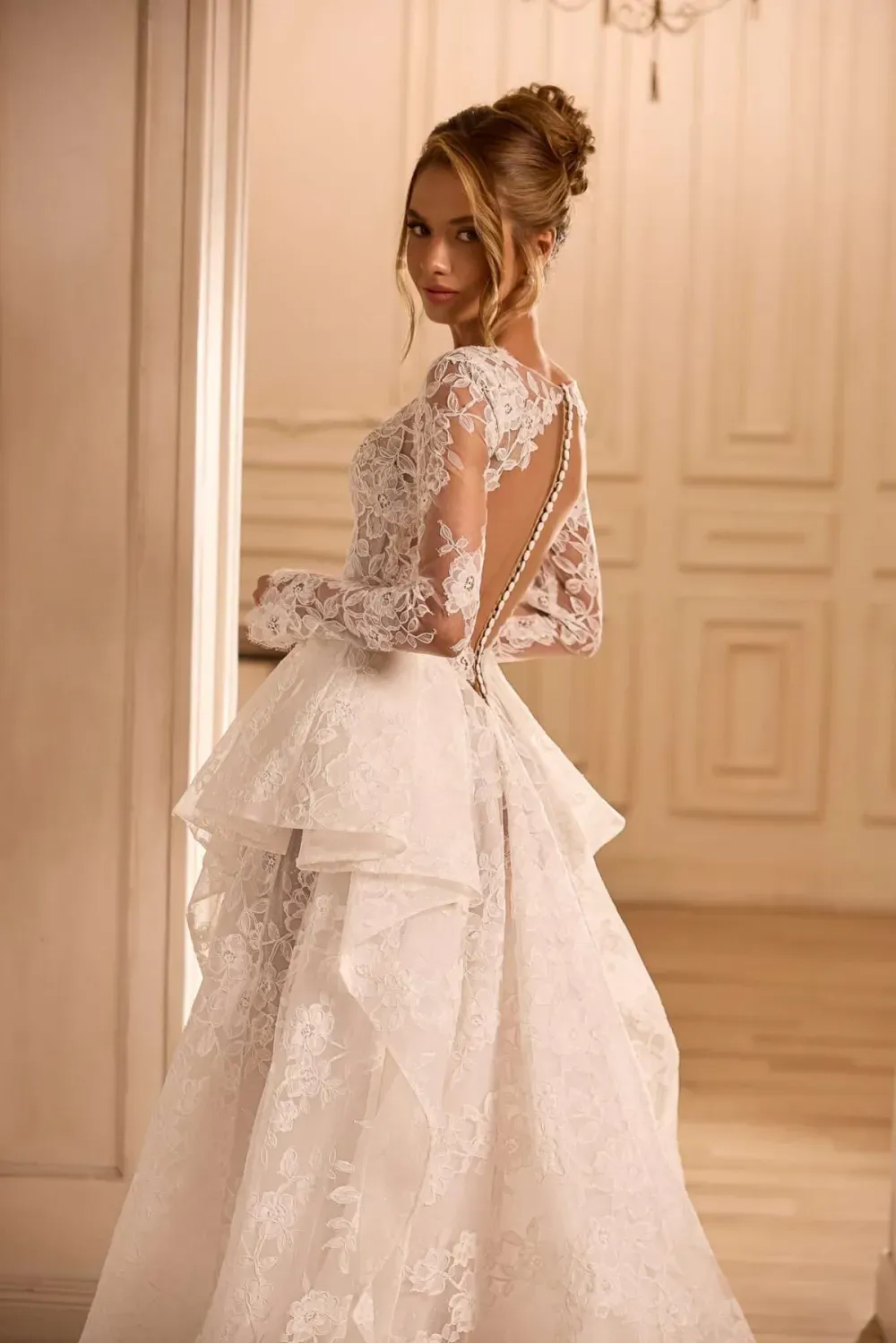
The Beauty of a Wedding Dress From Behind
Open backs, delicate lace panels, corset lacing and rows of covered buttons. The back of a wedding dress can be just as important as the front.
When we imagine a wedding dress, we usually picture the front: the neckline, the bodice, the waist and the silhouette.
But some of the most beautiful bridal design details are revealed only when the bride turns around.
A dramatic open back can transform a minimalist gown. A delicate illusion panel can make embroidered flowers appear to float against the skin. A row of tiny fabric-covered buttons can turn a simple seam into a beautiful decorative feature.
The back of a wedding dress isn’t merely a finishing detail. It’s an essential part of the design.
The back deserves a second look.
1. Open-Back Wedding Dresses
Open-back wedding dresses feature a cutaway section that exposes part of the back.
The opening can be relatively shallow or extend dramatically towards the waist.
In minimalist bridal fashion, an open back often becomes the central design feature, creating contrast with an otherwise simple silhouette.
In lace gowns, the opening may be framed by delicate appliqués, embroidery or decorative straps.
The depth and shape of the opening influence how the dress is supported, particularly when the gown has a fitted or strapless bodice.
Signature look: An elegant, uninterrupted opening that draws attention to the back.
2. Illusion Back Wedding Dresses
Illusion backs use transparent or semi-transparent fabrics to create the appearance of an open back while maintaining a fabric foundation.
Fine tulle or mesh may support lace appliqués, embroidery, beads or decorative buttons.
The effect can be particularly striking when floral motifs are arranged to appear as though they rest directly against the skin.
However, illusion fabric isn’t necessarily invisible. Its appearance depends on the mesh colour, texture and how closely it matches the wearer’s skin tone.
Signature look: Sheer fabric with delicate decoration and the appearance of floating details.
3. Corset-Back Wedding Dresses
Corset-back wedding dresses use lacing to close or adjust the bodice.
Depending on the design, the lacing may be a visible decorative feature or a functional element that helps control the fit.
Ribbon, cord or other suitable materials are threaded through loops or eyelets along the back opening.
A well-constructed corset back distributes tension through the bodice rather than concentrating pressure at individual fastening points.
Signature look: Decorative lacing combined with an adjustable bodice closure.
4. Button-Back Wedding Dresses
Rows of small buttons are among the most recognisable details in traditional bridal design.
They may extend from the neckline to the waist or continue down the skirt and train.
Fabric-covered buttons create a particularly refined appearance because they blend with the surrounding material.
Not every decorative button is functional. Some gowns use concealed zippers or other fastenings beneath a row of buttons.
Signature look: A continuous decorative line that emphasises the length and construction of the gown.
5. Keyhole Back Wedding Dresses
A keyhole back features a shaped opening surrounded by fabric.
The opening may be circular, oval, teardrop-shaped or more architectural.
Unlike a fully open-back design, the keyhole retains a substantial amount of fabric around the opening.
This allows designers to introduce a decorative cutout while maintaining a more covered silhouette.
Signature look: A defined opening framed by the surrounding bodice.
The Back Must Work With the Front.
A dramatic back opening changes the construction of the entire bodice.
Neckline support, shoulder placement, closures and internal structure must all work together to maintain the intended silhouette.
6. Low V-Back Wedding Dresses
A V-back features a neckline that descends into a pointed shape at the back.
The depth can range from a modest opening to a dramatic plunge extending towards the waist.
V-backs are particularly effective in gowns with shoulder straps or sleeves, where the fabric creates two diagonal lines converging towards the centre.
The shape can emphasise the vertical proportions of the dress and create a beautifully defined back neckline.
Signature look: A pointed back opening with clean, elongated lines.
7. Cowl-Back Wedding Dresses
Cowl backs use softly draped fabric that falls into folds across the back.
They are particularly associated with fluid materials such as satin, silk charmeuse and lightweight crepe.
The effect depends on the fabric’s drape and the way the pattern is cut.
A beautifully constructed cowl back should create graceful folds without excessive pulling or distortion.
Signature look: Soft, fluid draping that introduces movement and understated elegance.
8. High-Back Wedding Dresses
High-back gowns provide greater coverage, often extending towards the neckline.
They may feature lace, embroidery, structured fabric or minimalist tailoring.
A high back can create a particularly elegant silhouette when combined with long sleeves or a high neckline.
However, coverage doesn’t necessarily mean simplicity. Elaborate embroidery or carefully positioned buttons can make a high-back design exceptionally decorative.
Signature look: Refined coverage with opportunities for intricate construction and decoration.
9. Strappy-Back Wedding Dresses
Strappy-back designs use narrow fabric bands, cords or decorative straps to create patterns across the back.
The straps may cross, run vertically or form geometric arrangements.
Some are functional components that contribute to support, while others are primarily decorative.
Their placement must be carefully considered to avoid unwanted tension or distortion.
Signature look: Decorative lines and geometric arrangements across an open or partially open back.
10. Lace-Up Back Wedding Dresses
Lace-up backs are closely related to corset-back designs, although the term may describe decorative lacing that doesn’t provide substantial structural support.
Some gowns use lacing as the primary closure, while others incorporate it over a separate internal fastening system.
The appearance can range from delicate ribbon ties to more elaborate corset-inspired construction.
Signature look: Visible lacing that creates a decorative and potentially adjustable back closure.
Wedding Dress Back Styles Compared
Creates a dramatic exposed area and emphasises clean lines.
Uses sheer fabric to support lace, embroidery and decorative details.
Introduces visible lacing and may provide adjustable closure.
Creates a refined decorative line, often extending towards the train.
Why Back Construction Matters
The back of a wedding dress plays an important role in the stability of the bodice.
Removing fabric to create a dramatic opening may reduce the available support, particularly in gowns that rely on the upper back or shoulders for structure.
Designers may compensate through internal corsetry, carefully positioned straps, reinforced seams or other construction techniques.
A beautiful open-back gown should remain secure without requiring constant adjustment.
The most successful designs balance visual drama with reliable construction.
Look at the Finish Around the Opening.
In a beautifully constructed gown, the edges of an open or illusion back should lie smoothly against the body.
Unwanted gaping, pulling or distortion can interrupt the intended silhouette.
Can You Change the Back of a Wedding Dress?
Some back modifications are possible, although their complexity varies considerably.
Lowering an existing back neckline may require changes to the bodice’s internal support.
Adding an illusion panel can sometimes be more straightforward, but the result depends on the original construction and available fabric.
Converting a zipper closure into a corset back may be possible in certain gowns, although it requires careful evaluation of the bodice and fastening system.
Major modifications should always be assessed by an experienced bridal alterations specialist.
How to Recognise a Well-Constructed Wedding Dress Back
Openings and necklines lie neatly against the body without excessive gaping.
Buttons, zippers, hooks and lacing function reliably and are properly finished.
The bodice remains stable when the wearer moves, sits or turns.
Lace, embroidery and appliqués follow the design lines without awkward interruptions.
Which Wedding Dress Back Style Is Best?
The ideal back design depends on the silhouette, fabric, construction and overall aesthetic of the gown.
Open backs create a dramatic minimalist effect. Illusion panels offer delicate decoration. Corset lacing introduces adjustable structure, while button details provide a refined traditional finish.
Cowl backs emphasise movement and fluid fabric, while high-back designs create opportunities for intricate embroidery and tailored construction.
There is no universally superior option.
The Final Word
The back of a wedding dress offers designers an extraordinary opportunity to introduce contrast, decoration and unexpected detail.
Sometimes the most memorable feature of a gown isn’t revealed until the bride turns away.
From delicate lace panels to dramatic open-back silhouettes, these details demonstrate how carefully considered construction can transform the character of a dress.
Because a truly beautiful wedding dress doesn’t stop being beautiful when you turn around.
Tips & Tricks
View All Tips & Tricks


The Fashion Brides is an independent editorial publication. Third-party images remain the property of their respective rights holders. For image credits, copyright concerns or removal requests, please see our Editorial & Copyright Policy .
