
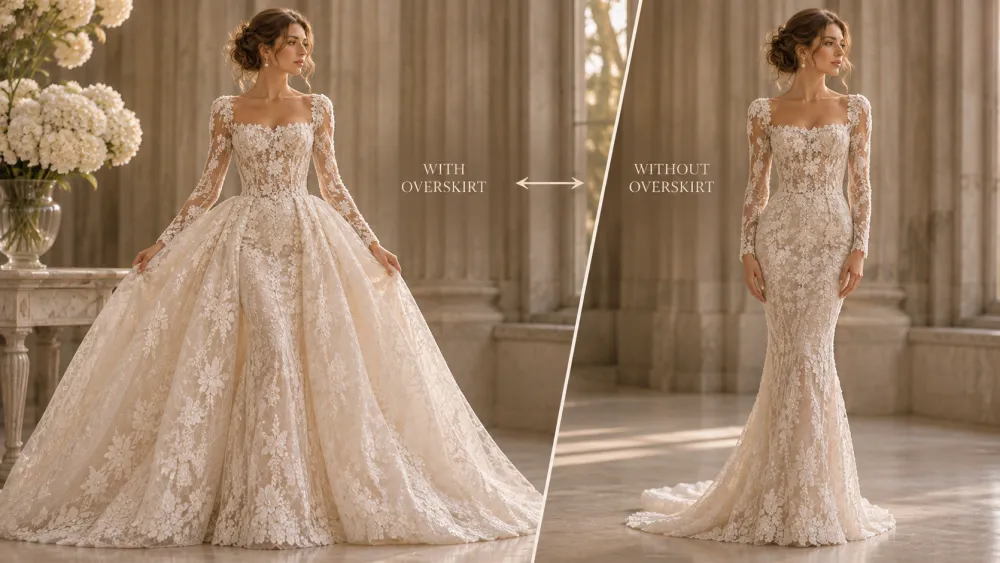
One Wedding Dress. Two Silhouettes.
From dramatic detachable ball gown skirts to delicate layers of tulle, bridal overskirts offer a beautiful way to transform a wedding dress without changing the gown underneath.
Imagine a beautifully fitted wedding dress with a sleek, sculptural silhouette.
Now add an extraordinary full skirt that sweeps across the floor, creating the proportions of a magnificent ball gown.
Remove that additional layer, and the original dress reappears.
That’s the beauty of a wedding dress overskirt: it allows designers to create two distinct silhouettes using a single bridal gown.
The reception can have its freedom.
What Is a Wedding Dress Overskirt?
A wedding dress overskirt is an additional skirt layer worn over the main gown.
It may be permanently attached or designed to be removed, depending on the construction.
Detachable bridal overskirts are particularly popular in transformable wedding dress designs because they allow the silhouette to change between different parts of the celebration.
Some overskirts create substantial volume. Others add transparency, texture, length or decorative detail.
The effect depends on the fabric, attachment method and shape of the underlying gown.
1. Detachable Ball Gown Overskirts
A detachable ball gown overskirt adds dramatic fullness around the waist and hips.
It can transform a fitted mermaid, trumpet or sheath gown into a silhouette that resembles a traditional ball gown.
Structured fabrics such as mikado, satin and taffeta can create pronounced architectural volume.
Lightweight layers of tulle or organza produce a softer, more romantic effect.
Signature look: A dramatic full skirt that can be removed to reveal a more fitted gown.
2. Tulle Wedding Dress Overskirts
Tulle overskirts introduce transparency, softness and volume without necessarily adding substantial weight.
They may consist of a single sheer layer or multiple layers gathered around the waist.
Depending on the design, the underlying dress can remain visible through the fabric.
This creates an interesting contrast between the structure of the original gown and the softness of the additional skirt.
Signature look: Airy volume, transparency and romantic movement.
3. Satin Wedding Dress Overskirts
Satin overskirts offer a smooth, luminous surface that can create beautiful sculptural folds.
The result depends on the weight and construction of the satin.
Heavier satin fabrics may hold pronounced pleats and dramatic shapes, while lighter varieties produce more fluid draping.
A satin overskirt can be particularly effective when paired with a minimalist fitted gown.
Signature look: Smooth fabric, elegant draping and controlled volume.
4. Lace Wedding Dress Overskirts
Lace overskirts introduce decorative texture without necessarily changing the underlying silhouette dramatically.
They may feature continuous lace fabric, embroidered tulle or individually positioned appliqués.
Some designs use a sheer lace overskirt to create a layered effect over a simpler gown.
Others incorporate substantial lace trains that add length and visual drama.
Signature look: Decorative layering, intricate patterns and romantic detail.
5. High-Low Wedding Dress Overskirts
High-low overskirts are shorter at the front and longer at the back.
This allows the underlying gown to remain visible while introducing additional volume or a dramatic train.
The style can be particularly effective over fitted wedding dresses because it preserves the front silhouette while adding movement behind.
Signature look: An exposed front silhouette with additional length and drama at the back.
Two Looks. One Beautifully Designed Dress.
A detachable overskirt can create the grandeur of a ball gown for the ceremony and reveal a fitted silhouette for the reception.
The transformation works best when both versions of the dress feel complete.
6. Organza Wedding Dress Overskirts
Organza is a lightweight, crisp fabric that can hold volume while maintaining a degree of transparency.
In bridal overskirts, it is particularly effective for sculptural folds, gathered layers and dramatic proportions.
Compared with softer tulle, organza can create a more defined architectural effect.
Signature look: Lightweight structure, crisp folds and airy volume.
7. Overskirts With Trains
Some bridal overskirts are designed primarily to introduce a dramatic train.
These may extend from the waist into a chapel, cathedral or longer train while leaving much of the underlying gown visible.
The design can create a spectacular ceremony silhouette without requiring the main dress to have a permanent train.
After the ceremony, the overskirt can be removed, eliminating the need to bustle the additional fabric.
Signature look: Dramatic length and movement that can be removed when no longer needed.
8. Asymmetric Wedding Dress Overskirts
Asymmetric overskirts use uneven lengths, directional draping or irregular fabric placement to create a contemporary silhouette.
They may add volume to one side of the gown or introduce sculptural folds that move across the body.
These designs are particularly interesting when paired with minimalist dresses, where the overskirt becomes the main architectural feature.
Signature look: Unexpected proportions and contemporary sculptural design.
Wedding Dress Overskirt Styles Compared
Creates dramatic volume and transforms a fitted gown into a fuller silhouette.
Adds soft, transparent layers and romantic movement.
Introduces smooth draping, structured folds and elegant volume.
Creates decorative layering through intricate patterns and sheer fabrics.
How Does a Detachable Wedding Dress Overskirt Attach?
Detachable overskirts may use concealed hooks, snaps, buttons, zippers or other fastening systems.
The attachment method depends on the weight of the fabric and the structure of the underlying gown.
Lightweight overskirts may require relatively simple fastenings.
Heavier designs often need additional support to prevent the attachment points from pulling or distorting the bodice.
Some overskirts incorporate an independent waistband, while others are designed to integrate directly with the gown.
The attachment should be secure, discreet and comfortable.
Can You Add an Overskirt to Any Wedding Dress?
Not every gown is equally suitable for an overskirt.
The original silhouette, waist construction, fabric and decorative details all influence the result.
A fitted gown with a clearly defined waist may provide a natural foundation for a detachable overskirt.
However, gowns with unusual waistlines, elaborate hip decoration or complex draping may require a custom solution.
An experienced bridal designer or alterations specialist can evaluate whether the additional skirt will work with the existing construction.
The Waistline Makes the Difference.
A beautifully designed overskirt should appear to belong to the original gown.
Its waistband, attachment points and transition into the skirt must work with the dress rather than interrupt its proportions.
Can an Overskirt Make a Wedding Dress Look Like a Ball Gown?
Yes, although the result depends on the overskirt’s volume and the shape of the underlying dress.
A full, structured overskirt can conceal much of a fitted gown and create the appearance of a traditional ball gown.
However, some designs intentionally leave the front of the original dress visible.
The most convincing transformations consider how the two silhouettes relate to one another.
What Is the Difference Between an Overskirt and a Detachable Train?
An overskirt adds an additional skirt layer, which may extend around the waist and hips.
A detachable train primarily adds length behind the gown.
Some designs combine both features, making the distinction less obvious.
The important difference is how much of the original silhouette is covered and where the additional fabric creates volume.
What Makes a Wedding Dress Overskirt Well Constructed?
The overskirt remains in place without pulling or distorting the gown.
The added volume complements the bodice and underlying silhouette.
Waistbands, seams and fastening points are carefully concealed or integrated.
The overskirt can be detached without damaging the gown or requiring complicated adjustments.
Which Wedding Dress Overskirt Is Best?
The right overskirt depends on the original gown and the effect you want to achieve.
Structured satin or mikado can create dramatic volume. Tulle offers softness and transparency. Lace introduces intricate decoration, while organza allows designers to explore architectural shapes.
For some gowns, a full detachable skirt creates the most dramatic transformation.
For others, a lightweight sheer layer or asymmetric overskirt provides a more subtle change.
It reveals another possibility within it.
The Final Word
Wedding dress overskirts offer designers an extraordinary opportunity to explore multiple silhouettes within a single bridal look.
They can introduce volume, texture, movement and dramatic trains without permanently changing the underlying gown.
From magnificent detachable ball gown skirts to delicate layers of transparent tulle, the possibilities are remarkably varied.
And when the construction is beautifully considered, the transformation can feel as natural as the original design.
Tips & Tricks
View All Tips & Tricks


The Fashion Brides is an independent editorial publication. Third-party images remain the property of their respective rights holders. For image credits, copyright concerns or removal requests, please see our Editorial & Copyright Policy .
